
Bigger Than Your Sunday Morning
Ms. Katelyn Nicoloff is a lifetime member of St. Patrick’s in Cheektowaga. She also serves on the Bishop Search Committee and as Assistant Director of Sleep Away Camp. She writes a blog on Substack, and this was her entry for Sunday, July 26th, in which she speaks about the role of the diocese in all of our congregations’ lives:
“A theme has been coming up in conversations I’ve been having around my diocese lately. A lot of people don’t really know what their diocese is. They know their parish. They know their priest. They know the people they sit with on Sunday morning. But the wider structure — the diocese, what it does, why it exists — is largely a mystery.
And I get it. For most people, church is a local experience. It’s the building down the street, the community you’ve built over years, the familiar rhythm of a Sunday morning. The diocese can feel abstract by comparison. Distant. Like something that exists in a different layer of the Church that doesn’t really touch your everyday life.
But I’ve been connected to my diocese since I was eight years old.
That’s when I first went to diocesan summer camp. And something about being in a space with kids from churches all across the diocese, kids I never would have met just by showing up to my home church, changed how I saw the Church. It was bigger than I had realized. There were more of us than I knew.
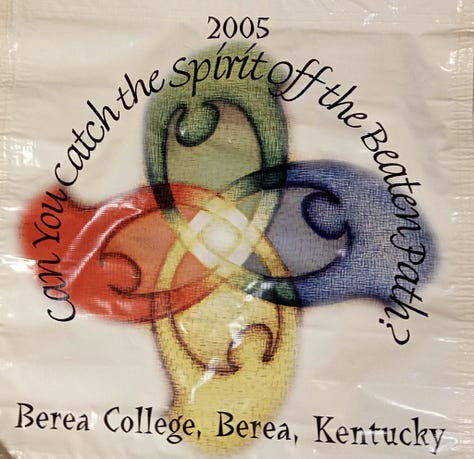
That connection deepened as I got older. I served on diocesan youth commission as a teenager. And when I was fifteen, I went to EYE (Episcopal Youth Event) in Berea, Kentucky. Nothing has ever quite matched that feeling. Thousands of Episcopalians my age from all over the country, all gathered in one place. It was the first time I truly understood how big the Episcopal Church actually is. I came home changed.
No matter what life or my home church threw at me, the diocese was always there. A place to come back to. As a camp counselor, a youth leader, always finding my way back to something larger than my Sunday morning. More recently I gave a presentation at a diocesan leadership day about social media in the Church, which introduced me to people from parishes I’d never encountered before. I also serve on the Bishop Search Committee, which has taken me to churches across the diocese for listening sessions, meeting people I never would have crossed paths with otherwise. Every time I engage at that wider level, I’m reminded of something I think a lot of Episcopalians are missing.
We are part of something much larger than our Sunday morning.
So what is a diocese exactly? In the Episcopal Church, a diocese is a geographic region made up of multiple parishes, all connected under the leadership of a bishop. It’s the layer of the Church between the individual parish and the wider national church. It exists to resource, connect, and support the parishes within it, to make sure no congregation is completely on its own.
And that support is more practical than people might realize. When a parish goes through a clergy transition, the diocese helps navigate it. When conflict arises, the diocese can step in to mediate. Training for lay leaders, resources for youth ministry, safeguarding, grants — none of that happens in isolation. Parishes don’t have to figure everything out alone because the diocese exists to help carry some of that weight.
Beyond the practical, there’s something about the diocese that I think gets overlooked. It preserves our unity while allowing our diversity. Every Episcopal parish has its own personality. High church or contemporary. Urban or rural. Large or small. Traditional liturgy or something more modern. And yet we’re all still part of one church.
A word too about the bishop, since that role is often misunderstood. The bishop isn’t just an administrator or the person who shows up for confirmations. In the Episcopal Church the bishop is the chief pastor of the diocese, the one who holds the whole community together and ensures the mission of the Church is being carried out across all its parishes.
But here’s what I think gets lost most often. The diocese isn’t just an administrative structure. It’s a community. A network of people across different parishes who share the same tradition, the same faith, the same baptismal covenant, even if they’ve never met. When you engage at the diocesan level, through events, through camps, through leadership days, through regional gatherings, you find out that the people wrestling with the same questions you are aren’t just in your pew. They’re across the diocese, in parishes you’ve never visited, led by priests you’ve never met.
It’s the moment the Church stops being a building and starts being a people.
Knowing that my church is part of something bigger has given me a sense of belonging that my home church alone couldn’t always provide. I’ve met people from rural parishes and city parishes and suburban parishes. And what I’ve learned is that my home church isn’t the Episcopal Church. It’s an expression of it. One voice in a much larger chorus. That’s a humbling and hopeful thing to realize. On the days when my home church feels small or stuck or discouraging, the diocese reminds me that the Episcopal Church is alive and active and full of people who care deeply about the same things I do.
But that only works if people know the diocese exists and feels accessible to them. And that’s where I think we’re falling short.
A church that never communicates what’s happening at the diocesan level is essentially telling its people that nothing is happening there. That the diocese is irrelevant to their daily faith life. And then we wonder why people feel disconnected from anything beyond their Sunday morning.
This is why communications matters so much. Not just at the parish level but at the diocesan level too. People need to know the diocese is alive and thriving. They need to see it showing up in their feeds, in their bulletins, in their conversations. Because if they can’t see it, it might as well not exist to them.
The Episcopal Church at its best is a community of communities. A network of parishes, each with their own character and culture, all connected to something larger. That’s a beautiful thing. But it only works if people know they’re part of it.
Still learning how big the table actually is.
Still showing up.
Still at the table.
Katelyn Nicoloff